
Sample Case Study
Horse Assessment
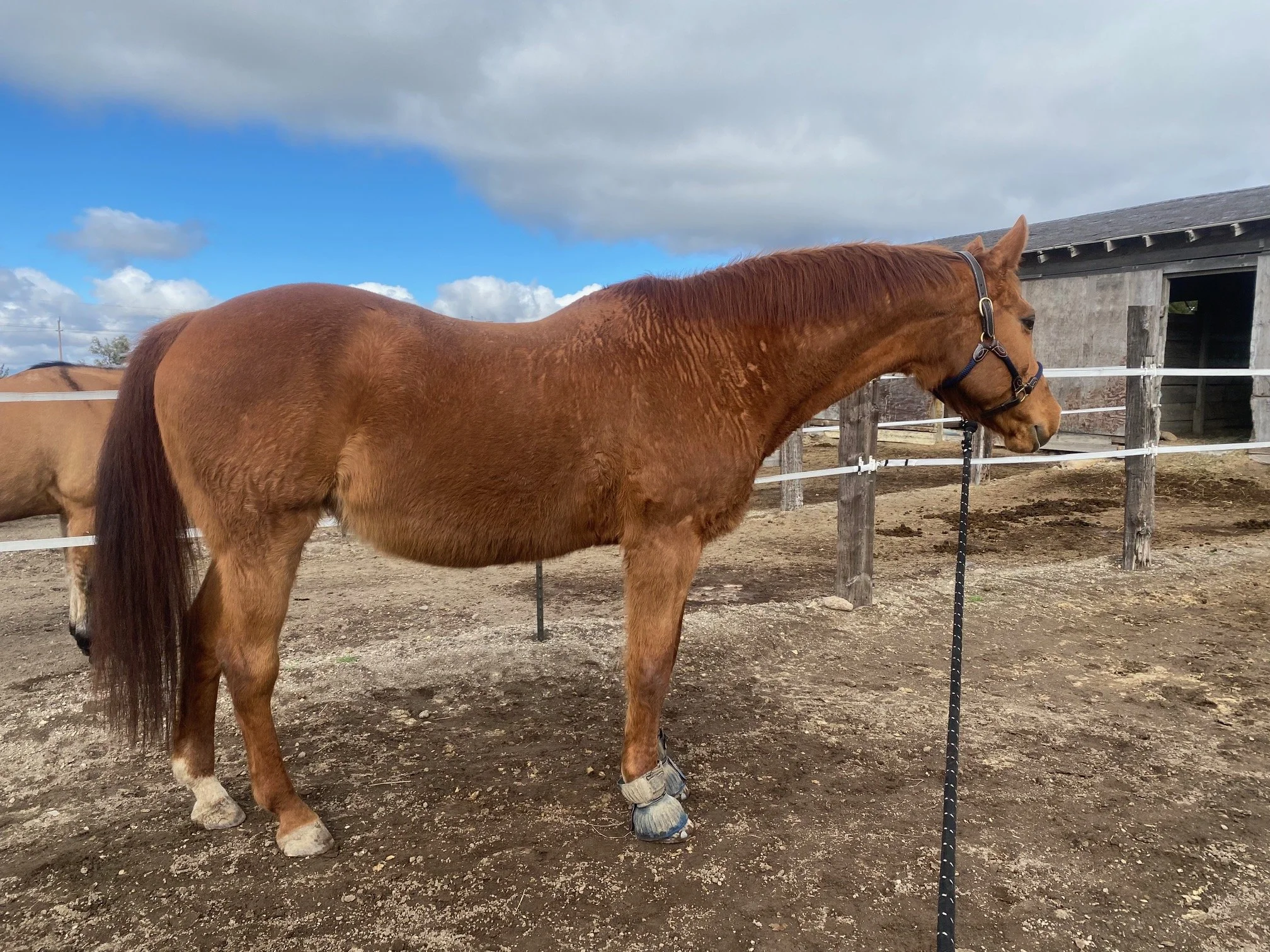
“Lea” is a 22 y.o. warmblood mare who is under light work (trail riding) and was diagnosed with PPID “Cushing’s Disease” 2 years ago. She was retired from a competitive dressage career due to osteoarthritis. She presented with a rough coat and a “hay belly” despite a 5-6 (moderate) body condition score. Lea frequently shows signs of stress when her routine or herd mates are changed. She has daily but limited pasture turn out with a buddy; otherwise she lives in a dry lot with an adjoining open stall. We originally weight taped Lea at 1403 pounds.
Hay Analysis Results:
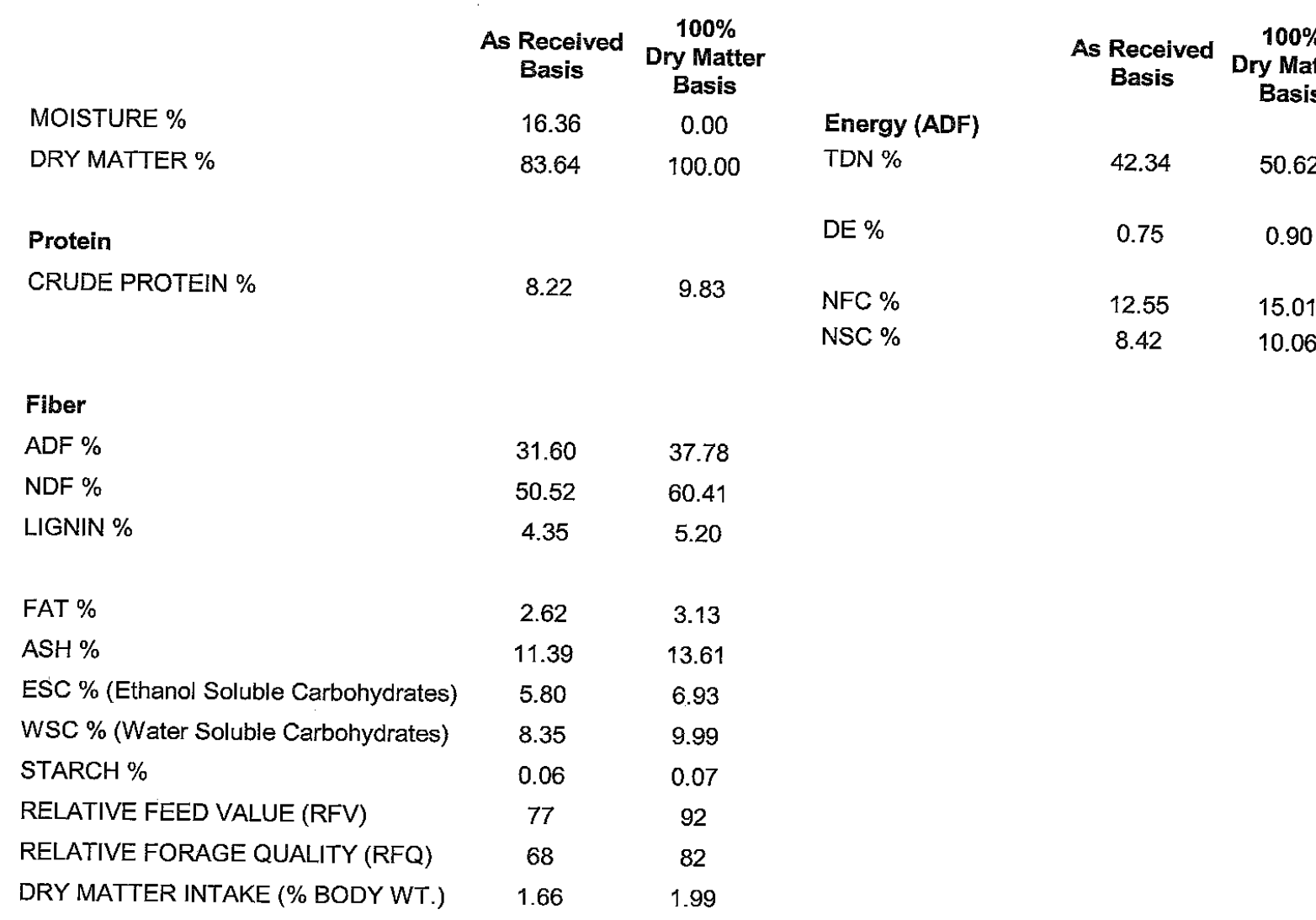
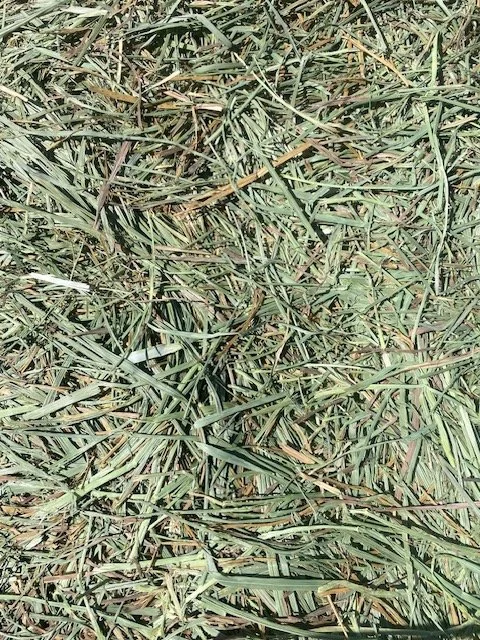
We weighed all of Lea’s feeds (including treats!) and supplements, as well as daily hay and pasture intake. We took samples of both the hay and pasture, which was sent to the lab for nutrient analysis. These “as fed” amounts were entered into a spreadsheet for analysis of nutrient content: protein, digestible energy (calories), fat, carborhydrates, and essential minerals and vitamins. Nutrient content was predicted from the National Research Council (NRC) for feeds that did not have a guaranteed analysis or feed tag available. In addition to hay and pasture, Lea was being fed rice bran, flaxseed, a ration balancer, and an array of supplements targeted towards her arthritis and digestive health.
Ration Assessment
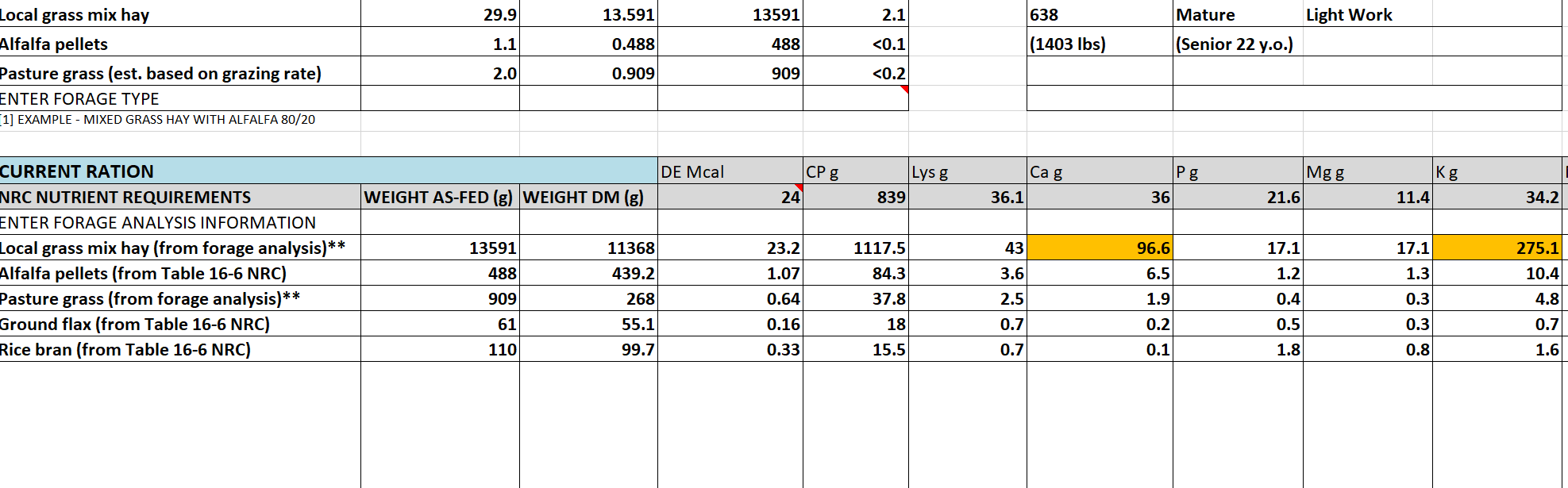
Excerpt from diet analysis-original ration:
Balancing the Diet
The nutrient profile for Lea’s current ration was compared to NRC requirements for a horse of Lea’s size and activity level - and some gaps (e.g., deficiencies) and imbalances were found. While digestible energy, crude protein, and most vitamins and minerals met Lea’s basic needs, there were excesses of iron (common in the soil- and hay), manganese, and calcium that caused an imbalance in ratios between several nutrients. This could have impeded or interfered with their correct function of these nutrients in the body.
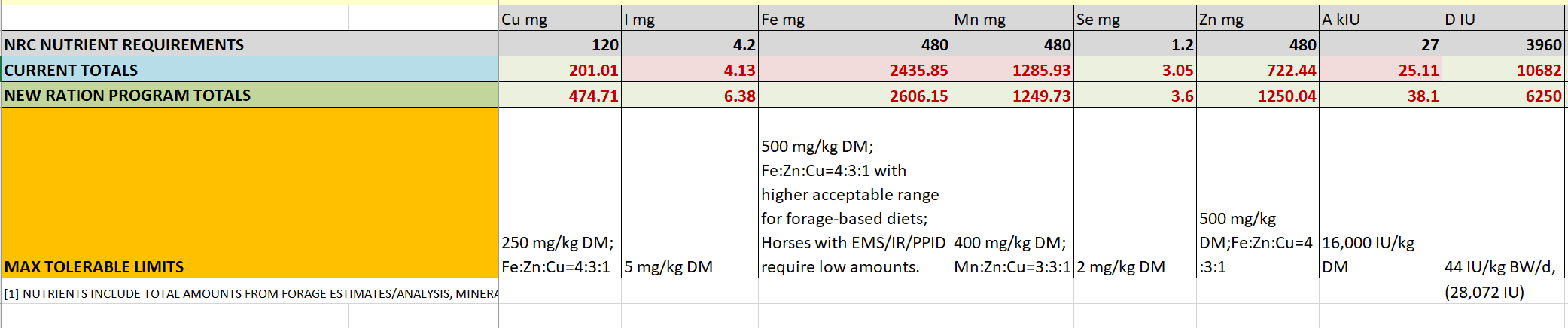
Excerpt from ration balancing spreadsheet-current versus proposed new ration:
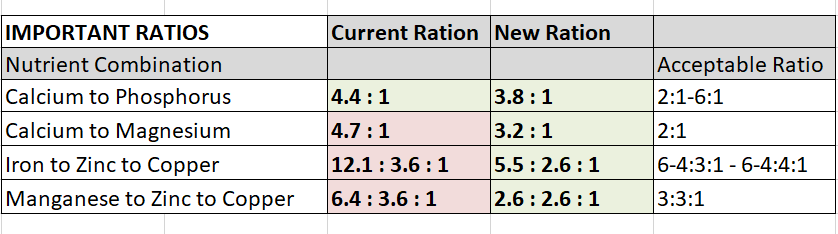
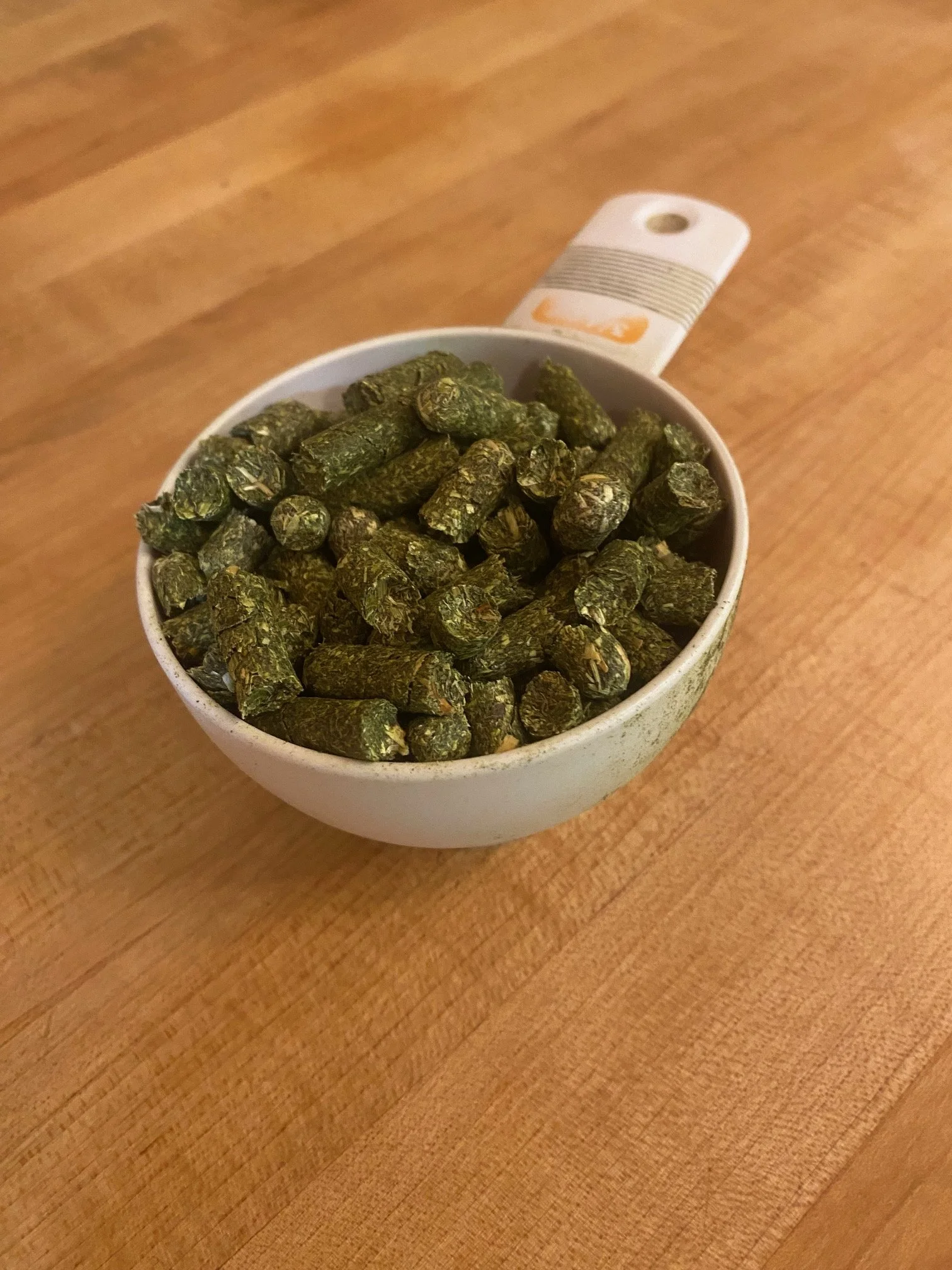
We balanced the ration by changing the “ration balancer” (vitamin & mineral mix) we were feeding Lea with her supplements, which was developed for metabolic horses. These pellets added a higher amount of zinc, copper, and magnesium to balance out the high iron and calcium in the diet. The ration balancer also addressed a vitamin A deficiency in the diet and we were able to great simplify Lea’s ration - by removing several supplements that Lea was receiving but not adding significant nutritional benefit. Rice bran was removed while flaxseed was kept in the diet to address a more favorable Omega-3/Omega-6 fatty acid profile.
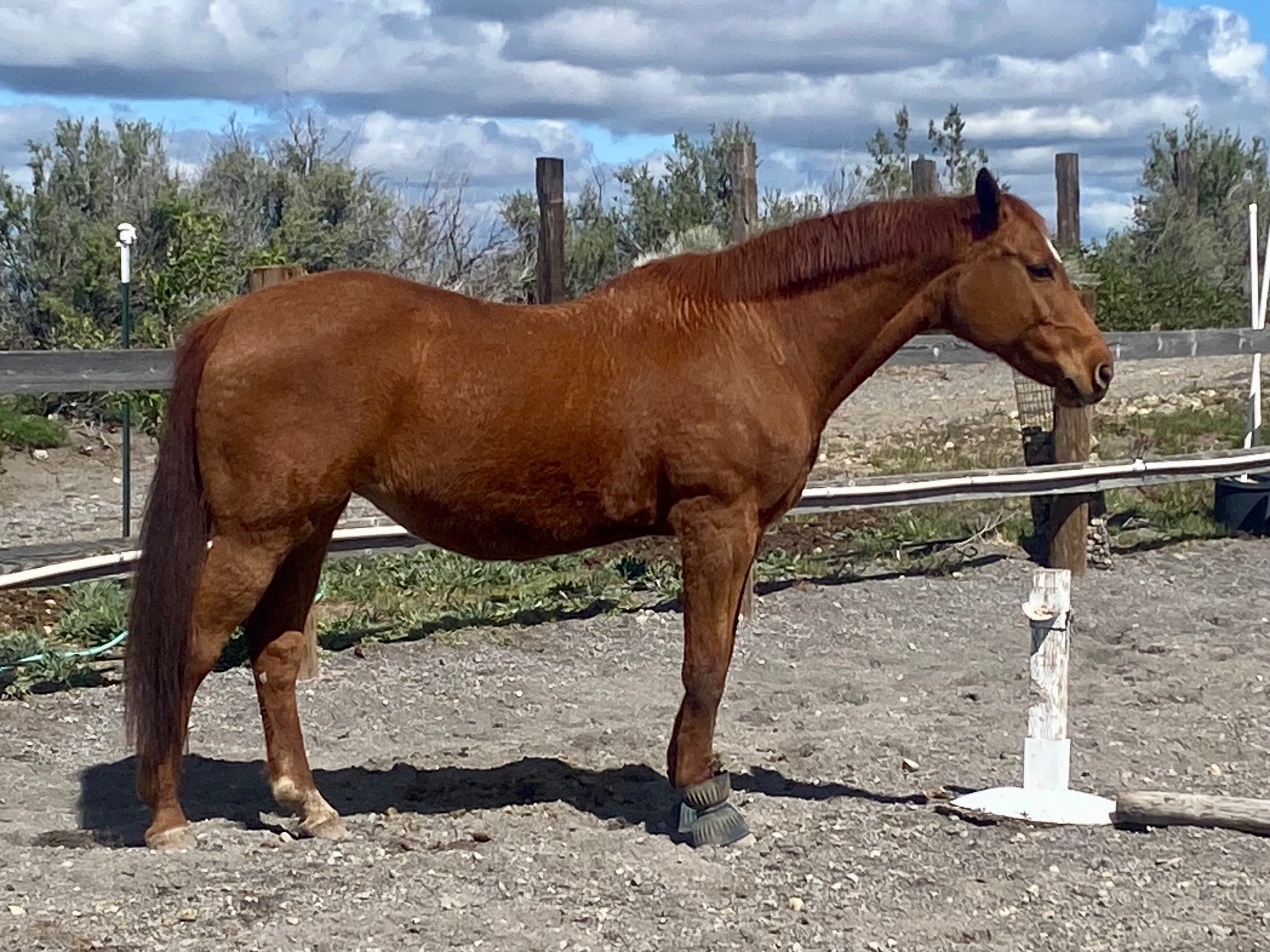
About one month later
Another addition to Lea’s diet was free salt, which like other new diet items, had to be fed gradually over several days to avoid feed refusals. Combined with veterinary care to lessen Lea’s osteoarthritis pain and discomfort, and regular exercise and turn out, she not only was less vigilant and stressed, but lost some weight and showed improved coat quality as spring turned towards summer. Her owner was able to simplify her feeding routine and also added a slow feeder haynet to maintain gut fill in a gradual manner.